

When you’re disabled and dependent on a caregiver for basic activities of daily living, they become an extension of you.
Your ability to survive, thrive and alleviate suffering is largely dependent on the quality and care you receive.
It’s hard to be dependent on other people. It’s terrifying to lose your independence and autonomy. Help doesn’t magically arrive when you become disabled, nor are you given extra help when your condition declines.
You are on your own.
If you’re fortunate enough, you may have someone able to step up and provide care.
Caregiving is difficult. It’s often unpaid. It can be thankless, physically demanding and emotionally draining. It’s one of the most important roles a person can play in the life of someone living with disabilities, and yet caregivers are often not recognized for their work.
We must do more to recognize them. We must talk about their life saving role. We must demand better for people with disabilities. Better social supports. A living wage. A renewed focus on autonomy and allowing disabled people to remain in their homes and communities as long as possible.
Unfortunately we’re going in the wrong direction. With the rise of fascism we’re also seeing a rise in eugenics. They almost always go hand in hand.
People with disabilities are increasingly being left behind.
In the US, ICE has been targeting the disabled. Last week Congress heard testimony from Aliyah Rahman, a Minnesota woman who was violently dragged from her car by ICE agents despite clearly telling them she was disabled and on her way to a doctors appointment.
I’ve written at great length about Rodney Taylor, a disabled double amputee who’s been held in an ICE camp for over a year.
There’s also Alma Bowman, a disabled woman who was a whistleblower and helped expose ICE atrocities after the first Trump regime. They grabbed her again this past March.
These are just some of the disabled people who’ve been directly harmed by ICE. There’s countless more whose stories will never be told. There’s people being disabled in the camps every day, whether by disease, malnutrition or abuse. We almost never hear about them.
Which brings me to Wael Tarabishi, a 30 year old disabled man living with Pompe disease, a chronic and progressive neuromuscular disorder.
He was bed bound and dependent on a feeding tube and a tracheostomy to survive. His father, Maher Tarabishi, was his full time caregiver.
Wael couldn’t move without the assistance of his father. He couldn’t feed himself, take his own meds or change out the various medical tubes and devices keeping him alive.
His father did it all for him. Family and friends described Maher as being Wael’s arms, legs and lungs.
It might sound drastic, but that’s the reality for many severely disabled people. Caregivers are a literal extension of our bodies. Without them, we can’t survive. That was the case for Wael and his father… Maher was integral to Wael’s survival and his overall quality of life.
In October, ICE took Maher Tarabishi and threw him in a detention facility. Why? Because he overstayed a visa back in 1994. He didn’t commit any crimes. In fact, in 2008 the US government granted him permission to remain in the country to care for his disabled son.
In exchange for being allowed to remain in the US, Maher had to do yearly check ins with immigration authorities to renew his work papers. He had legal status and carried proof of his son’s disability, yet when he showed up for his check in, he was placed in handcuffs and arrested.
It’s entrapment. Maher did everything right. He was following the laws of the country. He was following the terms laid out for him to stay. He wasn’t hiding. He wasn’t ‘causing trouble’. He voluntarily showed up for a check in and found himself thrown in a camp and separated from his son.
Wael begged for his father to be released. He said he would die without him. Some people felt that was hyberbole. They felt that if it was ‘really that bad’ the family should have had a contingency plan.
Let me be perfectly clear… often there is no contingency plan. Being severely disabled is hard. It’s expensive. There’s little to no support. There is no ‘Plan B’. Disabled people die every day because they don’t have the support necessary to survive.
The government won’t provide it. Family and friends often abandon you when you become disabled. Private care is obscenely expensive and out of reach for most people.
That’s why Maher was critical to Wael’s survival. He had no one else.
Wael gave interviews where he said he didn’t just lose a caregiver, he lost his best friend. He lost the person who made him feel safe.
Those of us living with severe chronic illness know how rare it is to feel safe. Our bodies betray us all the time. We never know what kind of suffering the next day will bring. Having someone who gives you a sense of safety, love and friendship means everything to us.
How dare ICE take that away from him. How dare they leave a disabled man alone to die. How dare they care so little about the lives of disabled individuals that they would detain someone knowing full well it would lead to the suffering and death of a US citizen.
They’re eugenicists. They didn’t care if Wael lived or died because they see disabled people as ‘useless eaters’. They see us as drains on the system. A problem to be ‘eliminated’.
Ripping away our caregivers is an efficient way to do this. It was a two for one deal. They detained an immigrant in order to hit their quota while also ensuring the death of a man they saw as worthless.
Remember, the Nazis did this too. They targeted disabled people. They coined the term ‘useless eaters’. They tested the gas chambers on us.
They knew the public wouldn’t rise up and fight back for disabled lives. They knew they could easily convince everyone that we were expendable.
We are not expendable. Wael was not expendable.
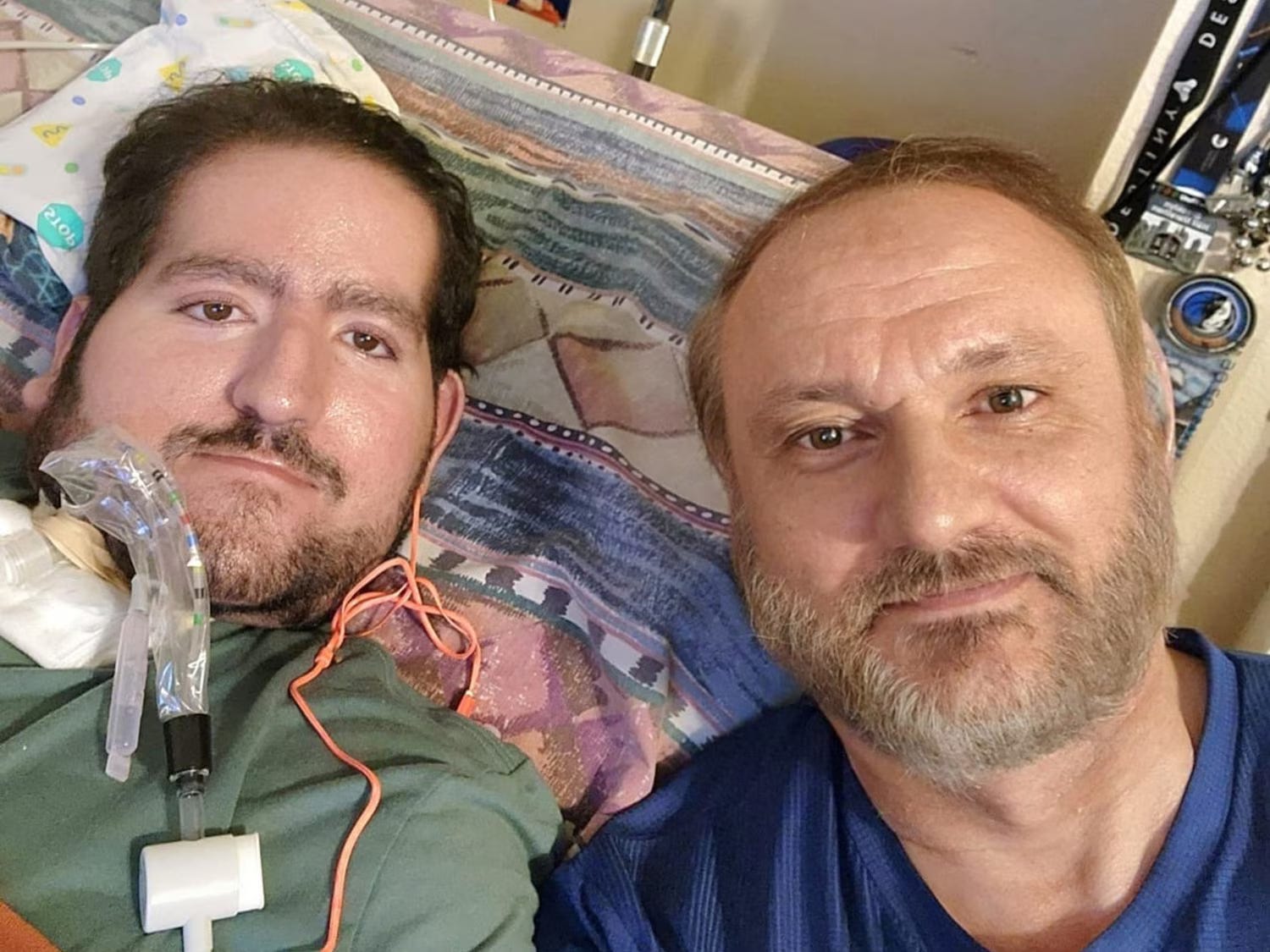
Image Description: Wael and Maher Tarabishi are laying side by side. Wael is hooked up to a tracheostomy.
Wael died without ever seeing his father again. He didn’t get to say goodbye. He didn’t get to hold his hand or hug him. He spent the last month of his life in a hospital bed in the ICU, and it was completely preventable.
This should enrage you. This should radicalize you. This wasn’t just ICE causing an unnecessary death, this was ICE causing months of pain and suffering.
They cause pain and suffering in the camps.
They cause pain and suffering in the communities they terrorize.
They caused Wael’s pain and suffering.
After he died, his father begged to be allowed out of detention to attend the funeral. He begged for a chance to say goodbye. ICE denied it.
Once again, they chose to cause pain and suffering.
Imagine dedicating your entire life to providing for your sick child. Imagine learning to be their lungs, their arms and their legs. Imagine knowing that you are the one person who’s able to alleviate their suffering, and then imagine being ripped away from them.
Maher has to live with knowing Wael would still be here if he wasn’t rotting in a camp. He has to live with the knowledge that his child’s final days were spent in pain and alone.
It’s a huge burden for him to bear, and this heartless regime wouldn’t even let him out to say goodbye.
Something has to give. Something has to change. I guarantee there are countless more stories just like Wael’s that will never be told. People who slip away without anyone noticing. People who die at the hands of ICE.
Caregivers Are a Part of Us
I know it can be hard to understand just how important a caregiver is to a disabled person.
I know it’s hard to imagine that you might become so sick that you are 100% reliant on another individual to survive.
This is one of the realities about disability that many people are too scared to face.
They understand getting sick and getting better. They understand getting sick and dying. They struggle to comprehend getting sick, losing all your independence and remaining that way forever.
I want to help people understand. It’s one of the reasons I started The Disabled Ginger. I wanted to talk about the unique challenges facing disabled lives.
Years ago, I suddenly lost my own primary caregiver. It’s a story I haven’t told because I’m still not prepared to fully talk about it. It was traumatic and caused a significant reduction in my baseline. It was one of the scariest experiences I’ve had since becoming disabled.
I don’t want to be dependent on other people. I hate that I need a caregiver to be able to bathe, eat or have clean clothes.
I was once fiercely independent, and coming to terms with needing someone for the most basic activities of daily living was arguably the hardest part of accepting my new life as a disabled person.
For the longest time I resented my caregivers. I hated their presence in my home. In my carefully curated safe space that had been all mine for years. They made noise. They posed a risk of disease transmission. They sometimes had scents on them that hurt me.
They felt like an unwelcome intruder disrupting my peaceful daily routine and I loathed them for it.
It wasn’t until they were suddenly taken away that I realized my resentment was woefully misplaced. I didn’t resent the person, I resented my disease. I didn’t resent the help, I resented needing the help.
It’s human nature to want to be independent. To want to be in control of our lives. To want to be able to have our own space, our autonomy and peace and quiet. When you become disabled a lot of those things that others take for granted become things you have to sacrifice.
I had to give up two jobs I loved. I had to give up travel. I had to give up driving. I had to give up most foods because I became too allergic to eat them. I had to give up doing my own cooking and cleaning. I had to give up being a foodie, doing yoga and seeing my friends.
In short, I had to give up almost everything. Just as I was coming to terms with what I had lost, I became even sicker and started requiring full time support.
So I had to give up the only thing I had left… my autonomy and independence. I had to start relying on someone else to survive.
Of course I was resentful. Anyone would be. I hated everything about it. But it was either let people help me or slowly suffer and die.
Accepting outside assistance allowed me to realize how much suffering a good caregiver can prevent. How much they can improve your quality of life. How much of your survival is literally in their hands.
It was equal parts terrifying and enlightening. Terrifying because I suddenly realized I might actually die without their support. Enlightening because it helped me reach a place of acceptance and gratitude that had eluded me for years.
Then they were taken away.
Thankfully I had some wonderful friends and neighbours who stepped up to take care of me until my caregiver returned.
They cooked, they cleaned, they picked up my mail and took out my garbage and brought me to the hospital.
It took a village, but I survived it. Many are not so lucky.
It was just over three months that I was without my full time support, and in that time I suffered. I declined. I needed the hospital. I lost weight and I began to lose hope.
Even with the help of an entire community of people, I was starting to slip away.
That’s why caregivers are so important. Disabled people need help to survive and that help needs to be the right kind of help.
My caregiver was keeping me alive while allowing me to avoid unnecessary suffering and preserve as much of my dignity and autonomy as possible.
Maher did the same thing for Wael.
I survived losing my caregiver, Wael didn’t. I firmly believe had I been dependent on tubes and a tracheostomy like Wael was, I wouldn’t have survived either.
ICE shouldn’t be allowed to rip a caregiver away. They shouldn’t be allowed to detain a person necessary for another human being’s survival. They shouldn’t be permitted to cause that much suffering.
I don’t have all the answers, I wish I did. All I know is we must keep fighting for the people ICE is hurting. We must keep fighting for disabled lives. We must keep fighting for all marginalized individuals.
I’m inspired every day by the people who are out in the streets of Minnesota protesting ICE and trying to protect their immigrant friends and neighbours.
I’m inspired by the people creating robust networks of community care to deliver groceries and supplies to people who are too scared to leave their homes.
I’m inspired by the children imprisoned by ICE who are brave enough to write letters and draw pictures that document the atrocities they’re experiencing.
We can all make a difference. Our actions right now matter more than ever.
Tell your story. Speak up when you can. Document atrocities.
If you’re dependent on a caregiver, share what it’s like. Talk about what they do to keep you alive. Talk about Wael. His story deserves to be told and his father needs to know he’s got a community of support behind him.
The more united we are in the fight against tyranny, the stronger we become.
We will win in the end, but it starts with a commitment to protect everyone who can’t protect themselves.
Leave no one behind.
Are you dependent on a caregiver? Do you experience caregiver resentment and if so, how do you overcome it?
Alternatively if you’re a caregiver yourself, how do you cope with the responsibility of holding another person’s life in your hands? How do you deal with resentment and burnout?
Share your stories below and let’s help keep Wael’s story alive.
This is such an important post! It needs to be shared far and wide. Thank you so very much for addressing this truly important issue that never gets proper attention!
Caregiving is hard work. I’m 71 years old and my twin sister and I are caregivers for my 96 year old mother who can no longer take care of herself and she now lives with me. It’s a full time job but if she was in a nursing home they would just keep her sedated to keep her quiet because she is in much pain and complains a lot.